
Ordering custom bags looks simple on the surface. You pick a style, add your logo, choose a quantity, and place the order. But somewhere between that first idea and the delivery truck, plenty of businesses end up with bags that are the wrong size, too flimsy, poorly printed, or delivered weeks after they were needed.
These mistakes are common, expensive, and almost entirely avoidable. Most come down to rushing the specification or assuming details will sort themselves out. This guide walks Canadian business owners through the most frequent errors made when ordering custom bags, why they happen, and exactly how to avoid them so your first order is one you are proud to hand out.
Why Ordering Custom Bags Goes Wrong
Most custom bag problems trace back to one root cause: decisions made too quickly without enough information.
A bag is a physical product that has to perform in the real world. When businesses focus only on price or appearance and skip over material weight, construction, or timing, the gaps show up after production, when it is too late and too costly to fix.
The good news is that every common mistake has a simple preventive step. Knowing them in advance is half the battle.
Quick Overview of Common Mistakes
Here is a summary of the most frequent errors and how to prevent them, before we look at each in detail.
|
Common Mistake |
Why It Happens |
How to Avoid It |
|
Wrong size |
Guessing instead of measuring contents |
Base size on real purchases |
|
Weak material |
Choosing on price alone |
Specify the right fabric weight (GSM) |
|
Poor artwork |
Low resolution or wrong format files |
Supply high resolution vector files |
|
No sample |
Rushing to full production |
Approve a pre production sample |
|
Underestimating lead time |
Ordering too close to the deadline |
Plan three to four months ahead |
|
Ignoring the gusset |
Focusing only on width and height |
Confirm depth for capacity |
|
Over ordering |
Buying too many of one design |
Match quantity to realistic demand |
Mistake 1: Choosing the Wrong Size
Size is the most common mistake, and often the most damaging. A bag that is too small for a customer’s purchase simply will not get used.
Businesses frequently guess dimensions instead of measuring what customers actually buy. The result is a bag that looks fine on paper but fails in practice.
How to Avoid It
- Measure a typical customer purchase before specifying
- Add a little room rather than sizing exactly to fit
- Confirm the gusset depth, not just width and height
- Order in more than one size if purchase sizes vary
Matching dimensions to real shopping behaviour is the foundation of a reusable bag that customers keep and reuse.
Mistake 2: Prioritizing Price Over Material Quality
The cheapest quote is tempting, but it is often the most expensive decision in the long run.
Thin, low GSM fabric tears easily, stretches under weight, and looks cheap in a customer’s hand. A bag that fails in public damages your brand far more than the small saving was ever worth.
How to Avoid It
- Ask for the fabric weight in GSM, not just the price
- Match material strength to the intended load
- Request construction details like seam and handle reinforcement
- Compare quotes on equal specifications, not headline price alone
Quality and cost should be balanced against purpose, not treated as a race to the lowest number.
Mistake 3: Submitting Poor Quality Artwork
Even a well made bag looks amateur if the printing is blurry, misaligned, or the wrong colour.
Many businesses supply low resolution logos, screenshots, or files in the wrong format, then are disappointed when the print does not match expectations.
How to Avoid It
- Provide high resolution vector artwork where possible
- Specify exact brand colours using a recognized colour system
- Confirm print placement and size before production
- Ask how your artwork suits the chosen fabric texture
Coarser fabrics like jute reproduce fine detail differently than smooth cotton, so artwork should always be reviewed against the actual material.
Mistake 4: Skipping the Pre Production Sample
Approving a design on screen is not the same as holding the finished product. Skipping the sample stage is a gamble that often does not pay off.
A sample reveals how the fabric feels, how the print looks in reality, how the handles perform, and whether the size works as intended, all before you commit to a full run.
How to Avoid It
- Always request a pre production sample for large orders
- Check colour accuracy, stitching, and handle strength on the sample
- Load the sample to test real world capacity
- Only approve full production once the sample meets expectations
The small delay a sample adds is far cheaper than reprinting thousands of flawed bags.
Mistake 5: Underestimating Lead Times
Custom bags are manufactured to order, so they take time. Businesses that leave ordering until the last minute often miss their deadline or pay heavy rush fees.
Standard production lead times frequently run eight to ten weeks or more, and that is before design approval, sampling, and shipping are factored in.
How to Avoid It
- Start planning three to four months before you need the bags
- Build in time for design, sampling, and delivery
- Order seasonal campaigns well in advance
- Confirm realistic timelines in writing before committing
Requesting a custom quote early gives you room to plan properly rather than reacting under pressure.
Mistake 6: Overlooking the Intended Use
A bag designed without its real world job in mind rarely performs well. A promotional giveaway and a grocery bag are not interchangeable.
Businesses sometimes order a single generic bag for every purpose, then find it fails at the demanding tasks and feels excessive for the light ones.
How to Avoid It
- Define exactly how the bag will be used before ordering
- Match construction to the heaviest expected load
- Consider specialty needs like insulation or bottle dividers
- Order purpose specific bags where use cases differ significantly
Food and temperature sensitive businesses, for example, often need insulated thermal bags rather than a standard tote, and specifying that upfront avoids disappointment.
Mistake 7: Ordering the Wrong Quantity
Getting the quantity wrong cuts both ways. Order too few and you pay premium rates on a small reorder. Order too many and you tie up budget in boxes of unused bags.
How to Avoid It
- Base quantities on realistic demand, not optimism
- Understand how pricing scales with volume before deciding
- Consider a moderate first run to test a new design
- Plan reorder timing so you never run out at a critical moment
Balancing unit cost against realistic usage keeps both your budget and your storeroom under control.
Mistake 8: Forgetting About Compliance and Safety
Bags handed directly to customers must meet safety and environmental standards, yet this is easy to overlook when focused on design and price.
Inks and materials should be certified free of lead and other contaminants, and materials should align with Canadian recycling or compostability expectations where relevant.
How to Avoid It
- Confirm inks and materials are certified contaminant free
- Ask about manufacturing standards and certifications
- Check that materials suit local recycling or compostability rules
- Choose suppliers who provide quality control inspection
This matters as much for premium items like reusable wine bags as it does for everyday grocery totes.
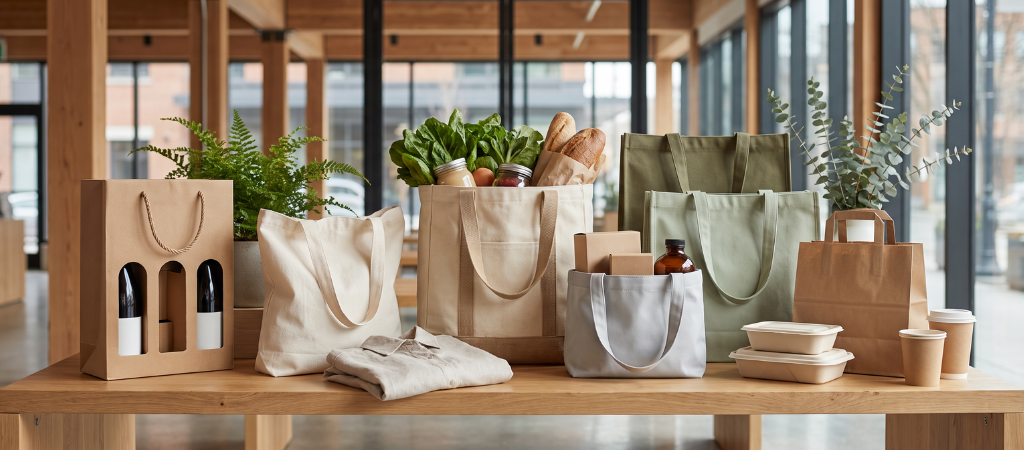
Industry Applications and Real World Examples
Different sectors tend to fall into different traps, so the lessons apply in specific ways.
- Grocery and retail: underestimating the weight bags must carry
- Wineries and liquor stores: overlooking bottle dividers and reinforced bases
- Fashion and boutiques: prioritizing looks over durability and print longevity
- Pharmacies: forgetting water resistance and wipeable materials
- Events and tradeshows: leaving orders too late for the event date
- Cafes and takeout: choosing bags too small for typical order sizes
Retailers stocking sustainable paper bag options alongside reusables face the same principles, since sizing, strength, and lead time apply equally to both.
Cost Savings From Getting It Right the First Time
Every mistake on this list shares one consequence: it costs money to fix. Reorders, rush fees, wasted stock, and reprints all erode your budget.
Ordering the correct specification the first time avoids these costs entirely. It also protects something harder to measure, your brand reputation, which suffers every time a poorly made bag fails in front of a customer.
A little extra time at the specification stage consistently pays for itself.
Customer Expectations and the Cost of Mistakes
Customers judge a bag the moment they pick it up. A sturdy, well made bag reflects positively on your brand, while a flimsy or poorly printed one does the opposite.
Because bags are often the final touchpoint before a customer leaves your store, a mistake at this stage leaves a lasting negative impression at the worst possible moment. Getting the details right protects the entire customer experience.
Industry Trends in Custom Bag Ordering
Canadian businesses are becoming far more careful and informed when ordering custom bags. A few years ago, most simply requested a standard tote and hoped for the best.
Today, buyers routinely ask about GSM, recycled content, construction details, and certifications before committing. Demand for pre production samples has grown, and businesses increasingly plan orders around longer lead times to secure better quality and pricing. As reusable bags become a permanent part of Canadian retail, this shift toward informed, detail driven ordering continues to strengthen.
How IceGreen Helps Businesses Order Custom Bags the Right Way
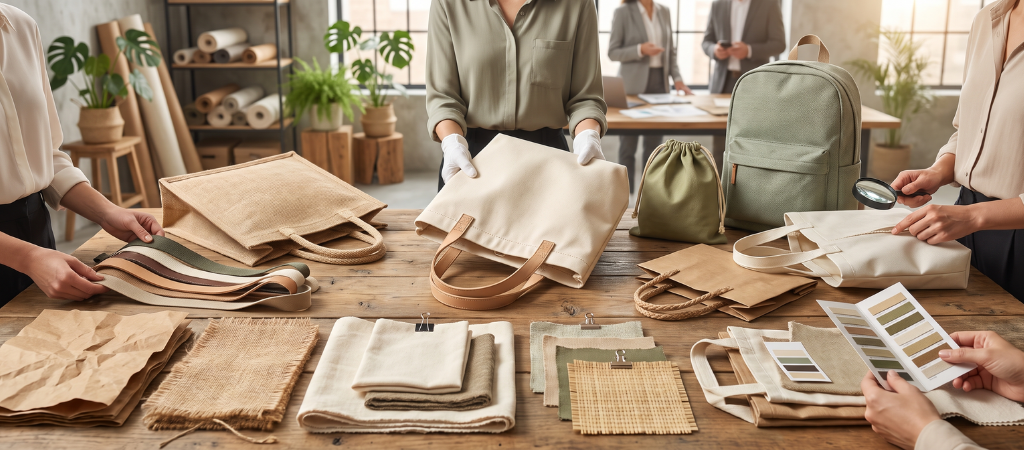
At IceGreen, we have spent nearly two decades helping Canadian businesses avoid exactly these mistakes. Our in house design team guides you through sizing, material weight, construction, and artwork before anything goes to production, so your first order is one that works.
We offer pre production samples, clear and realistic lead times, competitive pricing, third party quality control inspection, and certified contaminant free materials produced in ISO compliant, environmentally friendly facilities. Our range covers cotton, jute, non woven, RPET, bamboo, and more, matched to your intended use with as many design iterations as you need. We also donate one percent of revenue to environmental causes.
If you want your custom bag order to go smoothly from the first conversation to delivery, our team is ready to help you get every detail right from the start.
Frequently Asked Questions
What is the most common mistake when ordering custom bags?
Choosing the wrong size is the most common mistake. Businesses often guess dimensions instead of measuring what customers actually buy, resulting in bags that are too small to be useful. Always base your size on real purchase behaviour and confirm the gusset depth before ordering.
How do I make sure my custom bags are good quality?
Ask for the fabric weight in GSM, request construction details like reinforced seams and handles, and always approve a pre production sample. Compare quotes on equal specifications rather than price alone, and choose a supplier who offers quality control inspection on every order.
Why is fabric weight (GSM) important when ordering bags?
GSM measures how thick and strong the fabric is. Higher GSM resists tearing and stretching, making it suitable for heavier loads, while lower GSM suits lighter use. Ordering the wrong weight is a frequent cause of bags failing early, so always confirm it upfront.
How far in advance should I order custom bags?
Plan at least three to four months ahead. Standard lead times often run eight to ten weeks or more, before adding design approval, sampling, and shipping. Ordering early avoids rush fees and gives you time to review samples and correct any issues.
Do I really need a pre production sample?
For any sizeable order, yes. A sample lets you check colour accuracy, stitching, handle strength, and real world capacity before committing to full production. The small delay it adds is far cheaper than discovering a flaw after thousands of bags have already been printed.
What artwork format is best for custom bag printing?
High resolution vector files generally produce the sharpest results. Supplying low resolution images or screenshots often leads to blurry or misaligned printing. Specify your exact brand colours using a recognized colour system, and confirm how your artwork will look on the chosen fabric texture.
How do I choose the right quantity of custom bags?
Base quantities on realistic demand rather than optimism. Understand how pricing scales with volume, and consider a moderate first run when testing a new design. Ordering too few leads to costly reorders, while ordering too many ties up budget in unused stock.
Are custom bags safe for food and everyday use?
Quality custom bags are, provided the inks and materials are certified free of lead and other contaminants. This is essential for bags used with groceries or given to families. Always confirm your supplier uses certified materials and manufactures in facilities meeting recognized safety standards.
