
Ask a business owner why they haven’t switched to reusable bags, and cost usually comes up first. Reusable bags cost more per unit than plastic, so on paper the plastic bag looks cheaper. But that comparison only looks at the price of a single bag, not what a business actually spends on packaging over a year, a season, or the lifetime of a bag.
When you factor in bag fees, constant reordering, waste disposal, and the marketing value a reusable bag delivers every time it’s carried in public, the numbers tell a different story. This guide breaks down the real cost of switching to reusable bags, with a side by side comparison and a simple way to calculate your own savings.
Why the Sticker Price Doesn’t Tell the Whole Story
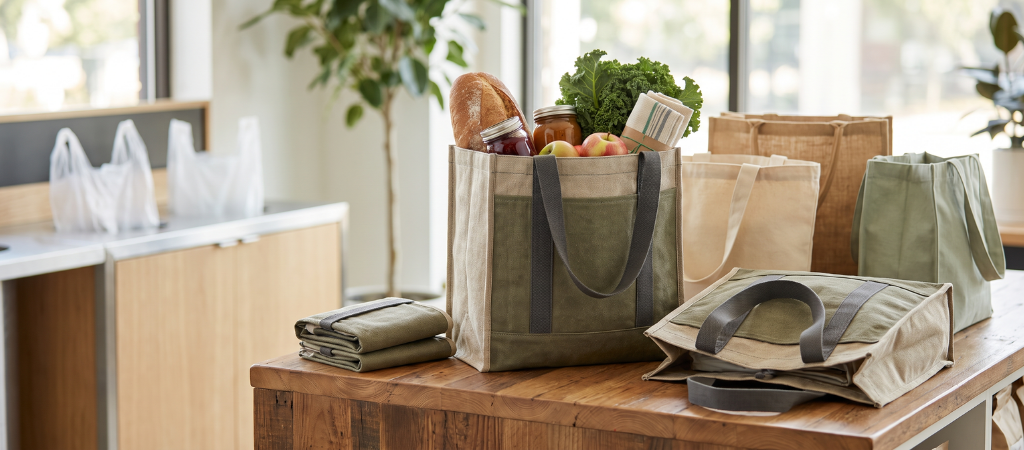
Comparing a five cent plastic bag to a two dollar reusable tote seems like an easy call, until you remember that the plastic bag gets thrown away after one trip and the reusable bag does not.
The number that actually matters for your budget is cost per use, not cost per bag. A plastic bag used once has a cost per use equal to its full price. A well made bag, like the styles in our reusable bags range, spreads that same upfront cost across a hundred trips or more, which changes the entire calculation in its favour.
The Hidden Costs of Sticking With Plastic Bags
Plastic bags carry costs that rarely show up on the packaging invoice itself.
- Repeat purchasing, since every bag is used once and replaced
- Bag fees and levies charged in many Canadian jurisdictions
- Waste management and disposal costs tied to single use packaging
- Compliance risk as more provinces and municipalities restrict or fee single use bags
- Reputational cost, as customers increasingly notice which businesses still hand out plastic
None of these costs disappear because they are indirect. They just show up in different line items, which makes plastic look cheaper than it actually is.
Calculating Cost Per Use: The Real Number That Matters
Cost per use is simple to work out: take the price of the bag and divide it by the number of times it gets used before it wears out.
Say a reusable non woven bag costs two dollars and lasts for 100 uses. That works out to two cents per use, and it keeps dropping the longer the bag survives. A plastic bag used once never gets below its full price, because there is no second use to divide it across.
This is why durability and cost are so closely linked. A cheaper reusable bag that falls apart after ten uses can end up costing more per use than a well made one that lasts for years.
Reusable Bags vs Plastic Bags: Cost Comparison
| Factor | Single Use Plastic Bags | Reusable Bags |
| Cost per unit | Very low | Higher upfront |
| Typical uses before replacement | 1 | 100 or more, depending on material |
| Cost per use over time | Fixed, repeats every trip | Drops sharply with reuse |
| Bag fees and levies | Often applies | Avoided after purchase |
| Reorder frequency | Constant, ongoing | Infrequent |
| Waste and disposal cost | Adds up per bag | Minimal after production |
| Brand exposure | None, discarded immediately | Ongoing, carried for years |
What Affects the Payback Period?
A reusable bag “pays for itself” once its cost per use drops below what a business would otherwise spend on plastic and fees. How fast that happens depends on a few things.
Material and Durability
Higher quality materials survive more uses, which lowers cost per use faster. A bag with reinforced seams and strong handles reaches its break even point sooner than a flimsy one.
How Often the Bag Gets Reused
A food delivery order that goes out in an insulated thermal bag reaches payback especially fast, since it gets used on every single order rather than occasionally. Design and usefulness matter too, since a bag customers actually want to carry gets reused more often.
Order Volume
Larger orders lower the price per bag from day one, which shortens the payback period before a single bag is even used.
Provincial Bag Fees and Bans: A Growing Cost of Plastic
Across Canada, many provinces and municipalities have introduced their own bans or fees on single use plastic bags, on top of broader federal efforts to reduce single use plastics. For businesses, this turns plastic bags from a small operating cost into a direct and growing expense.
Reusable bags sidestep this cost entirely once purchased. As more jurisdictions tighten these rules, the gap between plastic and reusable costs is likely to widen rather than close. Always confirm current requirements in your specific province or municipality, since rules continue to evolve.
Cost Savings Through Bulk Ordering
Custom reusable bags follow standard volume economics: the more you order, the lower your per unit cost.
Businesses that order enough non woven, cotton, RPET, or jute bags in a single run typically see meaningfully lower unit pricing than businesses reordering small batches throughout the year. Requesting a custom quote based on your expected volume is the easiest way to see exactly where your break even point sits.
The Marketing Value That Offsets the Cost
A reusable bag does something a plastic bag never does: it keeps working after the sale. A premium reusable wine bag handed out at checkout, for example, keeps advertising a winery or shop long after the bottle inside is gone.
Every time a customer carries a branded bag through a parking lot, on transit, or into another store, your logo travels with them for free. Factoring that ongoing exposure into the comparison makes reusable bags look even stronger, since the same bag lowering your packaging spend is also generating impressions plastic never could.
Industry Applications and Real World Use Cases
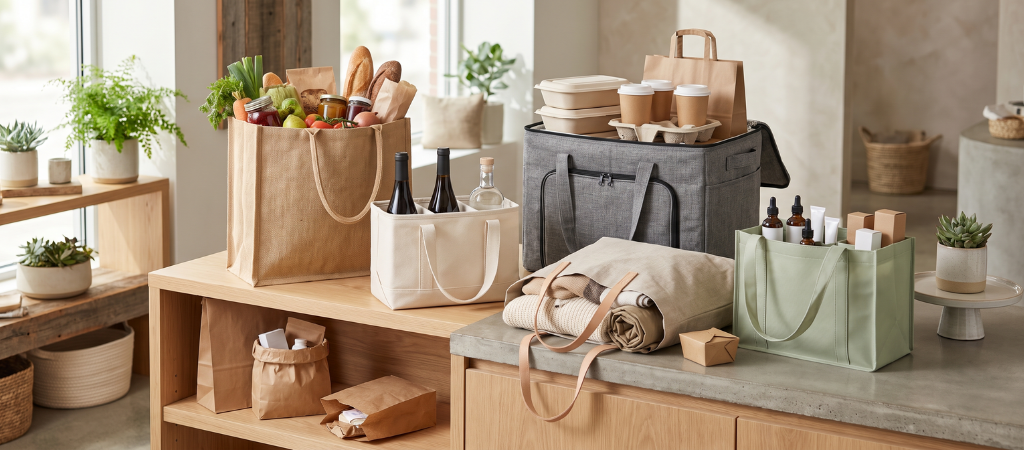
The cost calculation shifts slightly depending on the industry.
- Grocery and retail: high volume bags where reorder frequency has the biggest impact on savings
- Wineries and gift retailers: premium presentation bags where perceived value offsets a higher per unit cost
- Food delivery and takeout: insulated bags that replace disposable containers on every order, not just at checkout
- Boutiques and fashion: cotton totes that customers keep and reuse well past the original purchase
- Pharmacies and healthcare: durable, wipeable bags that reduce how often replacement is needed
Many businesses also keep paper bags on hand for smaller purchases, giving customers a lower cost option at checkout while reserving reusable bags for larger orders.
A Simple Way to Calculate Your Own Savings
You don’t need complicated modelling to get a useful estimate. Three numbers are enough to start.
- How much you currently spend on plastic or disposable bags per month
- The price per unit for the reusable bag you’re considering
- A conservative estimate of how many times that bag will realistically be reused
Divide the reusable bag’s price by the expected number of uses to get its cost per use, then compare that to what you currently spend per customer visit. In most cases, the break even point arrives faster than businesses expect.
Sustainability and Cost: Where They Overlap
The most cost effective reusable bag and the most sustainable one are usually the same bag. Both come down to the same thing: how many times it gets reused before it wears out.
A durable bag lowers your cost per use, reduces the number of bags produced and discarded over time, and cuts down on disposal costs tied to constant plastic replacement. Choosing quality materials is not just an environmental decision, it’s a financial one.
What Canadian Customers Expect
Canadian shoppers increasingly notice which businesses still hand out flimsy plastic and which have invested in something better. A sturdy reusable bag signals a business thinking beyond the immediate sale, which builds trust in a way a five cent plastic bag never will.
That goodwill carries its own value, even before the direct cost savings are counted.
Regulatory Compliance in Canada
Canada continues to move away from single use plastics through federal efforts, and many provinces and municipalities have added their own bans and fees. For businesses, this trend adds an ongoing cost to plastic that reusable bags simply don’t carry.
Choosing bags made with certified, contaminant free materials in responsible facilities also helps businesses stay ahead of tightening standards, rather than adjusting after the fact.
Market Trends and Buyer Behaviour
Canadian businesses are increasingly treating packaging as a budget line worth optimizing rather than a fixed cost. More buyers are asking about cost per use and volume pricing before committing to an order.
As plastic bag fees and restrictions continue to expand, the financial case for reusable bags keeps strengthening. Businesses that switch early are locking in savings before the gap widens further.
Why Businesses Choose IceGreen for Cost-Effective Reusable Bags
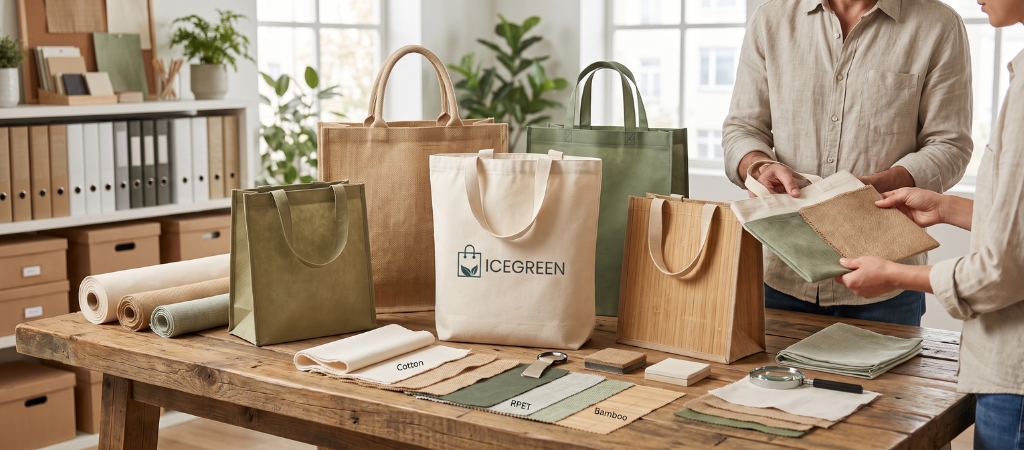
At IceGreen,, we’ve spent nearly two decades helping Canadian brands find reusable bags that make financial sense, not just environmental sense. Our in house design team helps you match material, quantity, and specification to your real usage, so you’re not overpaying for durability you don’t need.
Every order includes competitive, volume based pricing, third party quality control inspection, and certified contaminant free materials produced in ISO compliant, environmentally friendly facilities. We work across cotton, jute, non woven, RPET, and bamboo, with recycled content options throughout. We also donate one percent of revenue to environmental causes.
If you want to see what switching could actually save your business, our team can walk you through the numbers and help you find the right fit.
Frequently Asked Questions
Do reusable bags actually save businesses money?
Yes, once you account for cost per use rather than cost per bag. A durable reusable bag used 100 or more times typically costs far less per use than repeatedly buying single use plastic bags.
How long does it take for a reusable bag to pay for itself?
It depends on the bag’s price, durability, and how often it’s used. Many businesses reach their break even point within a few months, especially once bag fees and reorder costs are factored in.
What hidden costs come with single use plastic bags?
Beyond the bag itself, costs include fees, waste disposal, constant reordering, and the reputational cost of lagging behind on sustainability. These add up quickly, even though they rarely appear as one line item.
Are there bag fees or bans that affect businesses in Canada?
Many provinces and municipalities have introduced their own bans or fees on single use plastic bags, alongside broader federal efforts. Requirements vary by location, so confirm current rules for your area.
Which reusable bag material offers the best cost per use?
It depends on use case. Non woven and RPET bags offer strong value for high volume needs, while durable cotton and jute spread a higher upfront cost across years of repeated use.
Does bulk ordering reduce the cost of custom reusable bags?
Yes, larger orders typically lower the price per unit significantly. Planning packaging needs ahead of time, rather than reordering in small batches, is one of the simplest ways to cut overall cost.
Do reusable bags offer marketing value beyond the cost savings?
Yes, every time a customer carries a branded bag in public it functions as free advertising. That ongoing exposure adds value on top of the direct savings from switching away from plastic.
Is switching to reusable bags worth it for a small business?
Usually yes, especially as plastic bag fees and restrictions expand. Even modest volumes benefit from lower cost per use over time, and the marketing value applies at any business size.
